


World Animal Day in Martinique: the hidden wildlife of the Jardin de Balata
Every year, on October 4th, World Animal Day invites us to take a fresh look at the species around us and the natural habitats they depend on. In Martinique, where tropical vegetation is home to a particularly rich variety of wildlife, sometimes all it takes is a little patience to enjoy some wonderful encounters.
At the Jardin de Balata, tropical plants naturally steal the show. Yet, behind a leaf, at the top of a tree, near a pond, or among the flowers, many animals roam freely.
Hummingbirds, birds, anoles, frogs, fish, tarantulas, and even iguanas are all part of the garden's life. For this World Animal Day in Martinique, let's go find them.
October 4th, a day dedicated to animals
Celebrated every year around the world, World Animal Day highlights animals and the issues surrounding their protection and well-being.
It also serves as a reminder of the close bond between species and their environment. Preserving an animal also means protecting the spaces where it can feed, find shelter, and reproduce.
In Martinique, gardens, tropical forests, rivers, mangroves, and wetlands form a mosaic of habitats that support remarkable biodiversity.
The Jardin de Balata, a tropical garden full of life
Located in the hills above Fort-de-France, the Balata Garden brings together an exceptional collection of tropical plants and flowers in the heart of lush vegetation.
This botanical richness also creates favorable conditions for many animals. The flowers attract pollinators, the trees offer refuge to birds, and the foliage, shaded areas, and water points all serve as small habitats.
The Balata Garden is therefore much more than a place to admire plants: it is a living space where flora and fauna coexist constantly. Provided you slow your pace and keep your eyes peeled!
What animals can you see at the Balata Garden?
Hummingbirds, the must-see of the Balata Garden

They are probably the most iconic animals in the garden. The hummingbirds enjoy the nectar provided on the terrace of the Creole house, as well as the abundance of tropical flowers found throughout the trail.
The terrace is a prime spot to observe them in large numbers. Elsewhere in the garden, stop for a few moments near the flowering plants: a flutter of wings, a movement between two torch gingers… and one might appear.
Beyond the spectacle, hummingbirds also contribute to pollination by carrying pollen as they move about.
The Martinique Oriole, a species unique in the world
See a black and orange silhouette moving through the branches? It might be theMartinique Oriole (Icterus bonana).
This bird has a remarkable characteristic: it is endemic to Martinique, meaning its natural range is limited to the island.
Despite its contrasting plumage, the dense vegetation provides plenty of hiding spots. Spotting one among the trees is a wonderful reward for observant visitors.

Anoles and Lesser Antillean Iguanas: the garden's reptiles
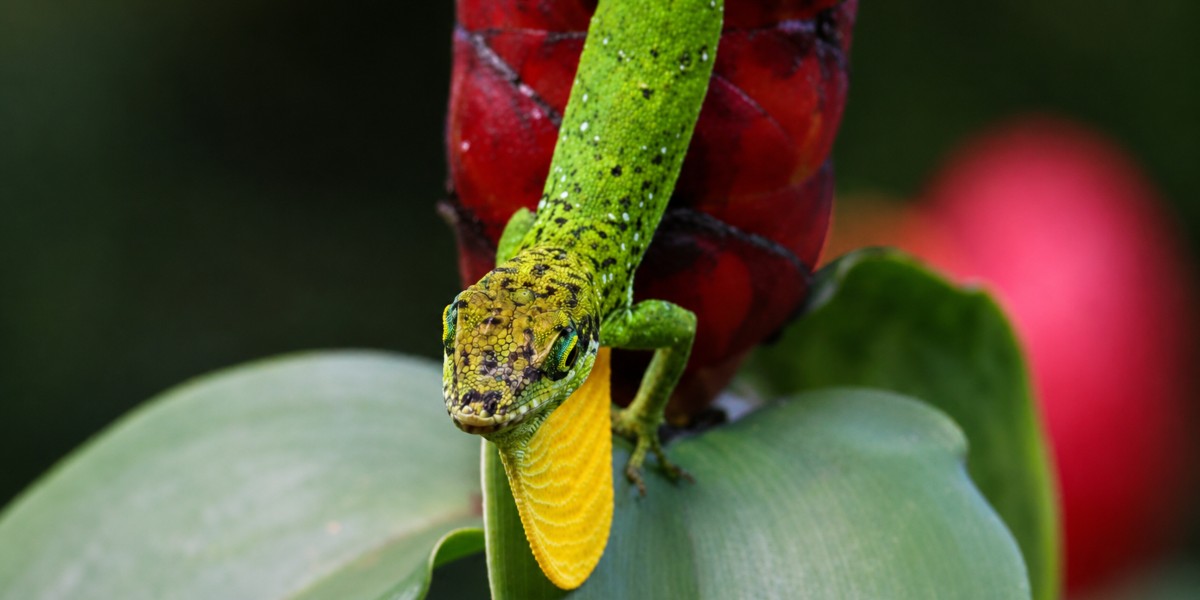
On tree trunks and in the foliage, anoles are frequently seen. These small lizards can remain perfectly still before vanishing in a flash between the leaves.
With a bit of luck, you might also spot a much larger animal roaming free: the Lesser Antillean iguana (Iguana delicatissima), also known as the "iguane péyi." Endemic to the Lesser Antilles, it is one of the iconic species of the Caribbean's natural heritage.
Now threatened with extinction, it is the subject of conservation measures in Martinique. The degradation of its habitat and the presence of the common iguana (Iguana iguana), an introduced species with which it can hybridize, are among the threats facing the species.
Spotting one moving freely through the vegetation at Balata is therefore a particularly precious encounter.
The yellow-crowned night heron, an elegant visitor to the garden
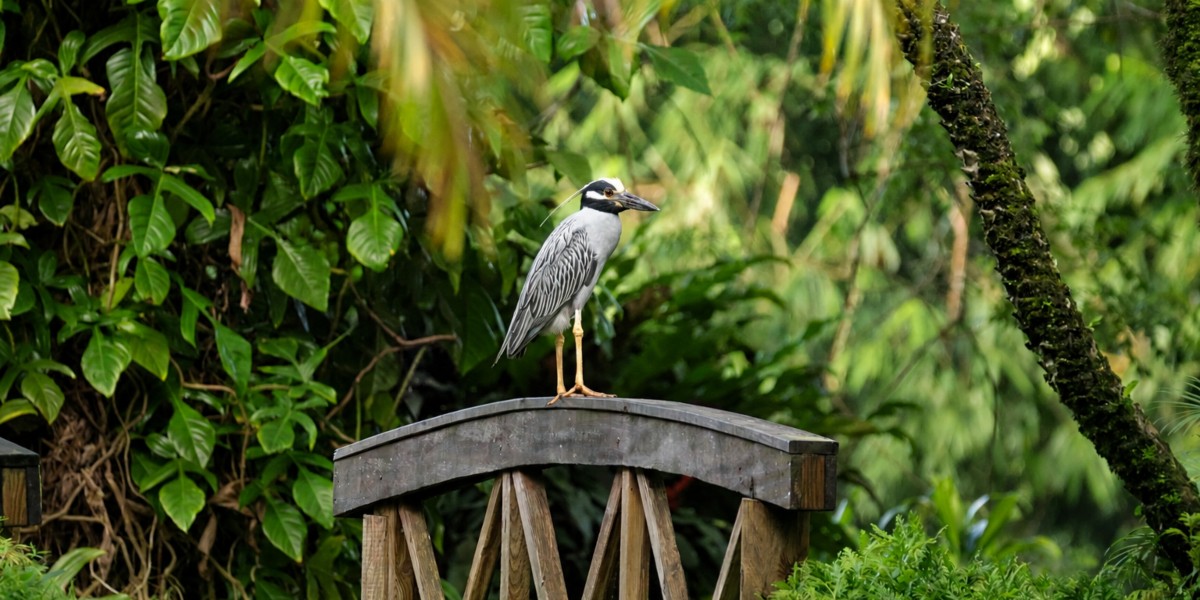
More imposing, the yellow-crowned night heron (Nyctanassa violacea) is recognizable by its long legs, sturdy beak, and contrasting head markings.
This small heron primarily frequents environments near water and wetlands. When it appears in the Jardin de Balata, its silhouette is easily distinguished from the small birds flitting about in the vegetation.
Matoutous, iconic to Martinique
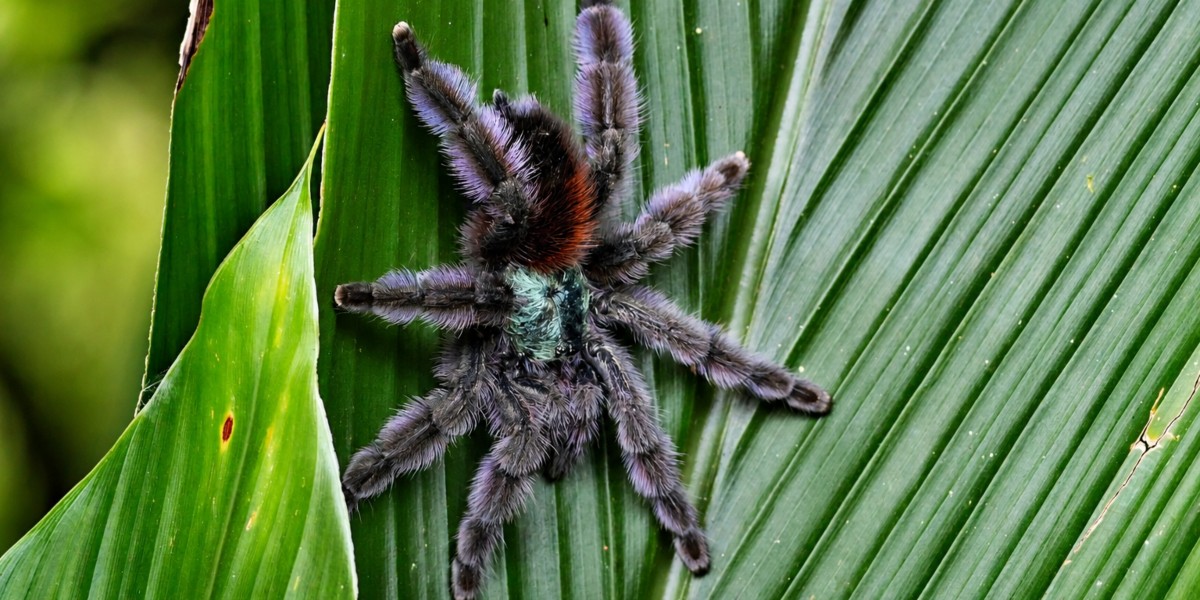
More impressive to some visitors, the matoutous are also among the inhabitants that one can sometimes encounter in the Jardin de Balata.
The Martinique pinktoe tarantula (Caribena versicolor) is a tarantula endemic to Martinique: it does not exist naturally anywhere else in the world. This remarkable species is currently threatened and is protected by law.
Generally discreet, it spends much of its time in hiding. Its presence is a reminder that Martinique's biodiversity also includes less visible species that are just as important to the ecosystem.
Local Saint-Pierre fish, inhabitants of the ponds
Animal life continues even in the ponds of the Jardin de Balata. You can notably observe local Saint-Pierre fish, also known as tilapia.
These fish have an interesting characteristic: they feed on, among other things, mosquito larvae found in the water, illustrating in their own way the interactions that exist between the different species in an environment.
From hummingbirds in the flowers to fish in the ponds, and anoles on the tree trunks, life is hidden in every corner of Balata.
Observing animals without disturbing them
Photographing a hummingbird, watching a bird, or discovering an anole hidden in the leaves are all part of the pleasures of a visit to the Jardin de Balata.
But when encountering wild animals, observing without interfering is always the best approachKeep your distance and do not attempt to catch, touch, or feed them.
World Animal Day is a wonderful opportunity to experience Balata in a new way. After admiring the tropical flowers, palms, and trees, take a few minutes to observe what is moving around you. You might be surprised by the number of animals you encounter during your walk.
Extend your World Animal Day experience at the Martinique Zoo
Want to continue your discovery of the animal kingdom? Head to Le Carbet and the Martinique Zoo.
Located on the historic site of Habitation Latouche, the park offers the chance to encounter many species: big cats, monkeys, anteaters, raccoons, birds, and many other animals can be seen along the trail.
Two complementary experiences for this World Animal Day in Martinique : at the Jardin de Balata, keep your eyes peeled for the wildlife roaming freely among the vegetation; at the Martinique Zoo, discover the species housed in the park and learn more about the animal world.
A wonderful way to dedicate October 4th to animals and biodiversity.
Découvrez nos autres actualités


Find us &
Contact us


Last admissions at 4:30 PM
Open 7 days a week from 9 AM to 6 PM
Fort-de-France 97234 - MARTINIQUE


